Baylor Russell Gym Concrete and Corrosion Repairs
Targeted joist concrete removal and reinforcement protection beneath a university gym.
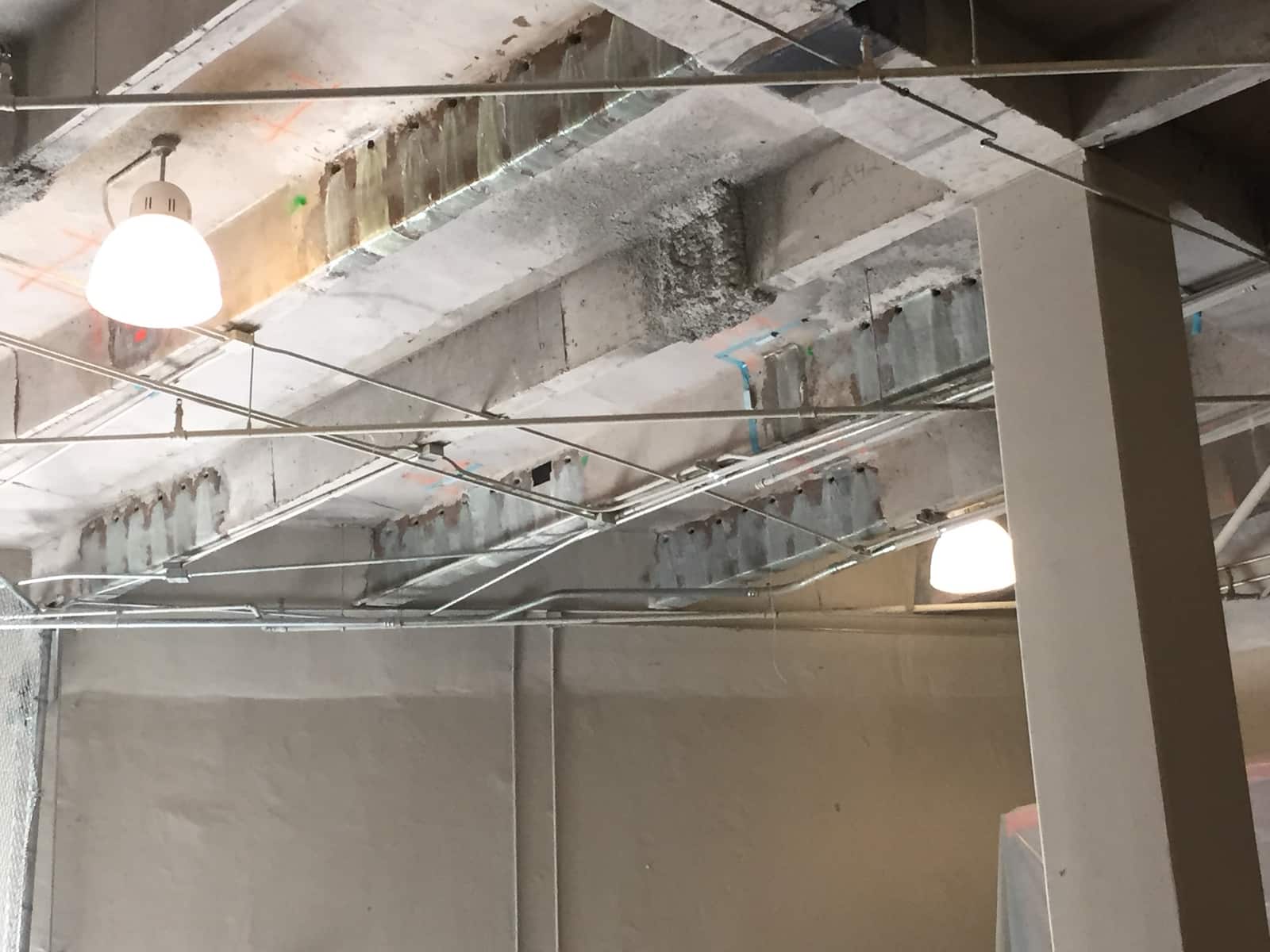
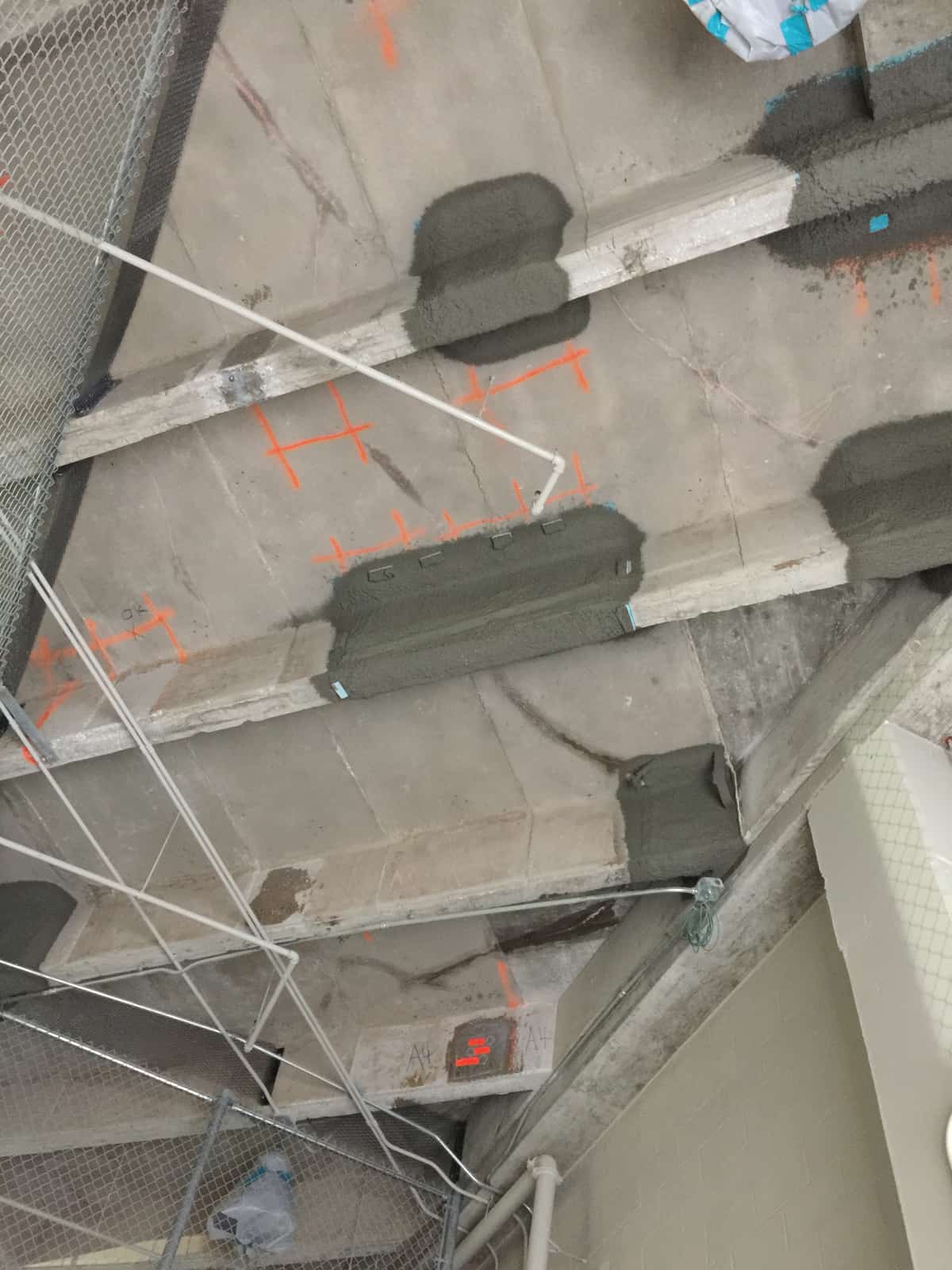
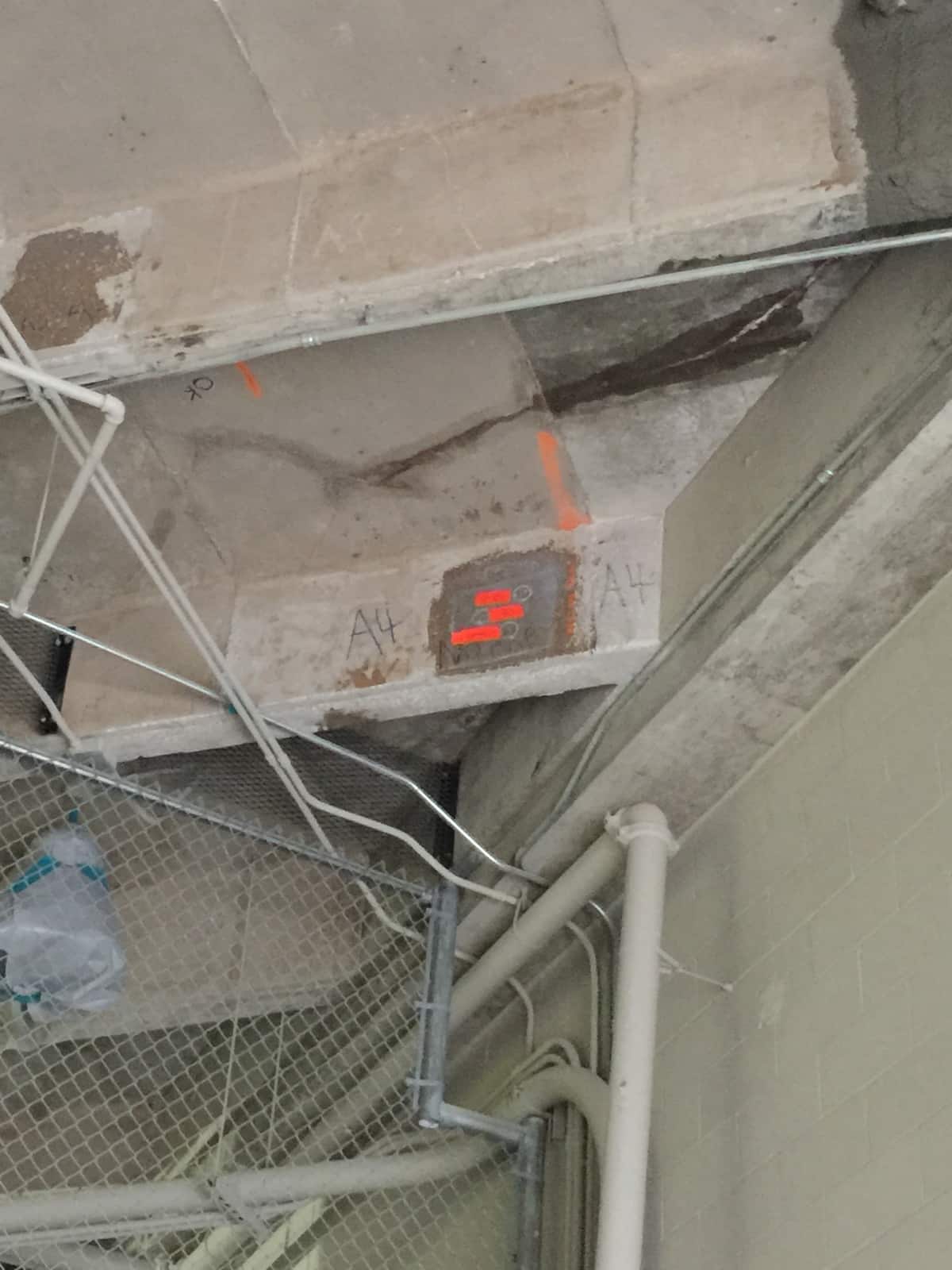
Delta Structural Technology completed targeted deterioration-control work beneath Baylor University’s Russell Gym in Waco, Texas. The scope focused on removing loose concrete, cleaning exposed reinforcing steel and applying corrosion protection to the joist reinforcement.
Project challenge
The underside of the gym contained widespread areas of deterioration, ranging from minor damage to substantial concrete loss. The university was considering the building’s longer-term future and requested a reduced repair scope for its near-term needs. This made the immediate objective clear: address loose material and exposed, corroding reinforcement within the selected work areas.
Project approach
Delta’s scope called for removal of loose concrete from joist bottoms, mechanical cleaning of corroded reinforcement and application of Sika Armatec 110 to exposed steel. Planning favored wire-wheel cleaning because abrasive blasting would be difficult to contain beneath the building. The specified work concentrated on deterioration control; the selected scope excluded replacement concrete and FRP reinforcement.
Delivery and coordination
Delta reviewed the site and structural drawings to plan work across a large footprint with dispersed repair locations. The construction estimate separated concrete removal and steel cleaning from application of the protective slurry and final debris cleanup. Aramark coordinated the university’s approval and scheduling, with the project released for scheduling in June 2015. Access beneath the building and the spread of deterioration shaped the work plan.
Project significance
Russell Gym demonstrates how a repair program can be aligned with a building owner’s immediate priorities. The project used targeted removal and reinforcement protection to address existing deterioration within a deliberately limited scope. It also illustrates the need to distinguish protective maintenance from a broader structural rehabilitation program when communicating the purpose of a completed repair.